
Chronic shoulder pain can become incredibly frustrating when nothing seems to fully fix the problem.
For many people, the issue is not just pain. It is the loss of mobility, stiffness when reaching overhead, discomfort during workouts, interrupted sleep, or feeling like the shoulder simply does not move the way it used to.
At Whitefish Chiropractic Center, we frequently work with patients from Whitefish, Kalispell, Columbia Falls, and the surrounding Flathead Valley who have already tried several conservative treatment options before considering shockwave therapy.
In some cases, the missing piece is identifying a deeper connective tissue problem that needs a different treatment approach.
Watch the Video
This video shares a real patient experience using shockwave therapy for chronic shoulder pain, stiffness, and mobility loss caused by shoulder calcification.
Dr. Connor Tobisch discusses why some shoulder problems stop responding to traditional treatment alone, what shockwave therapy feels like, and how this patient gradually regained mobility after struggling with ongoing pain and limited movement.
Why Some Shoulder Problems Become Chronic
Not all shoulder injuries respond the same way.
Some improve quickly with rest, stretching, chiropractic care, or physical therapy. Others become long-term problems that continue lingering for months or even years.
One reason this happens is because chronic shoulder conditions often involve changes within the connective tissues themselves.
This may include:
- Calcification within the tendons
- Chronic inflammation
- Tissue degeneration
- Restricted tissue mobility
- Scar tissue formation
- Reduced blood flow to the area
When these changes occur, patients may notice:
- Persistent stiffness
- Pain at end-range movement
- Limited overhead mobility
- Pain that repeatedly comes back
- Temporary improvement followed by setbacks
In these situations, traditional treatments may help manage symptoms without fully restoring normal function.
A Real Example of Chronic Shoulder Mobility Loss
One of our patients, Cara, initially came into the clinic dealing with shoulder pain and mobility restrictions that were not improving the way she hoped.
She had already gone through multiple conservative treatments, including:
- Chiropractic care
- Dry needling
- Manual therapy
- Physical therapy
- Laser therapy
- Rehabilitation exercises
Some of these approaches temporarily reduced pain levels, but her shoulder mobility still was not returning fully.
Eventually, imaging revealed calcification within the connective tissues around the shoulder.
That finding helped explain why the problem had become stubborn and resistant to traditional care alone.
Why Calcification in the Shoulder Can Be So Difficult to Treat
Calcification occurs when calcium deposits build up within tendons or surrounding connective tissue structures.
This commonly affects the rotator cuff tendons and may contribute to:
- Shoulder stiffness
- Sharp pain with movement
- Weakness
- Reduced range of motion
- Chronic irritation
In many cases, patients continue trying to stretch or strengthen the area without realizing the tissue itself has changed structurally.
That is why some people feel like:
- Physical therapy only helped temporarily
- Exercises stop working
- Mobility plateaus
- Symptoms keep returning
When connective tissue quality has been affected, treatment may need to focus more directly on stimulating tissue healing and remodeling.
How Shockwave Therapy Helps Chronic Shoulder Conditions
On our Shockwave Therapy page, we discuss how shockwave therapy helps stimulate the body’s natural healing response using acoustic wave technology.
For chronic shoulder conditions, shockwave therapy is often used to:
- Stimulate tissue repair
- Improve circulation
- Reduce chronic irritation
- Support connective tissue remodeling
- Improve mobility
- Help break up calcification over time
This is especially useful for patients who feel stuck between temporary symptom relief and more invasive treatment options.
Rather than simply masking symptoms, the goal is to improve tissue function and help restore movement.
What Shockwave Therapy Felt Like During Treatment
One of the questions patients often ask is what treatment actually feels like.
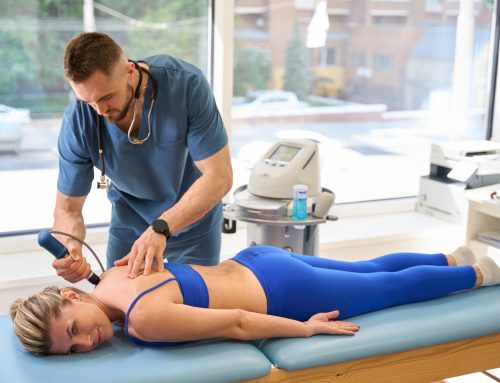
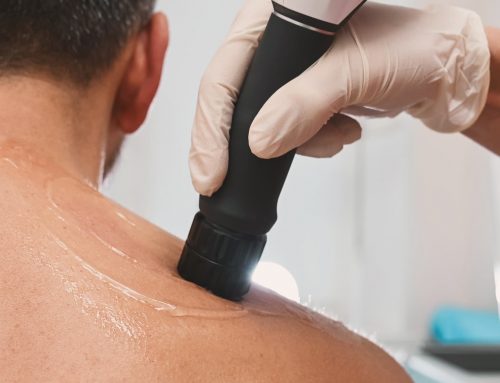
Cara described the treatment as a rhythmic pounding sensation over the affected area. Early sessions felt more intense because the tissue was still highly irritated and sensitive.
As treatment progressed:
- The shoulder became less stiff
- Mobility gradually improved
- Pain levels decreased
- Treatments became easier to tolerate
This progression is common with chronic connective tissue injuries.
Most patients do not wake up completely pain-free after one session. Improvement usually happens gradually as tissue healing and mobility improve over time.
How Long Does It Take to Notice Improvement?
Every patient responds differently depending on:
- How long the problem has existed
- The severity of tissue damage
- Activity levels
- The presence of calcification
- Overall health and healing capacity
In Cara’s case, she began noticing major improvements in shoulder mobility after approximately 8 to 10 treatments.
By the end of care:
- Her range of motion had significantly improved
- End-range pain had decreased
- Daily movement became easier
- She no longer needed continued treatment for the shoulder
When Shoulder Pain May Need More Than Stretching or Exercise
Many shoulder problems are treated with stretches, strengthening routines, or mobility exercises. Those approaches absolutely have value.
However, chronic connective tissue conditions sometimes need more than exercise alone.
If the underlying tissue remains irritated, calcified, or restricted, patients may continue experiencing:
- Recurring flare-ups
- Limited mobility
- Pain during exercise
- Difficulty sleeping
- Reduced performance during sports or lifting
This is where a more targeted treatment approach may help.
At Whitefish Chiropractic Center, treatment plans are individualized based on the patient, diagnosis, imaging findings, movement limitations, and goals.
Shoulder Conditions That May Respond Well to Shockwave Therapy
Shockwave therapy is commonly considered for:
- Calcific shoulder tendinitis
- Rotator cuff irritation
- Chronic shoulder stiffness
- Tendon degeneration
- Reduced range of motion
- Chronic overuse injuries
- Sports-related shoulder pain
Frequently Asked Questions About Shockwave Therapy for Shoulder Pain
Can shockwave therapy help calcific shoulder tendinitis?
In many cases, yes. Shockwave therapy is commonly used for chronic calcific tendon conditions because it may help stimulate tissue remodeling and improve mobility.
Why does shoulder mobility stay limited even after physical therapy?
Sometimes the issue involves chronic connective tissue changes, calcification, or tendon degeneration that require additional treatment beyond exercise alone.
Is shockwave therapy painful?
Some discomfort is normal, especially during early treatments when tissues are highly irritated. Most patients tolerate treatment well, and sensitivity often improves over time.
How many treatments are usually needed?
Treatment recommendations vary depending on the condition and severity. Chronic shoulder conditions often require multiple treatments over several weeks.
Is surgery always necessary for shoulder calcification?
Not always. Many patients first explore conservative options such as shockwave therapy, rehabilitation, chiropractic care, and mobility-focused treatment before considering surgical intervention.
Looking for Help With Chronic Shoulder Pain in Whitefish, Kalispell, or Columbia Falls?
If you are struggling with shoulder pain, stiffness, calcification, or mobility limitations that are not improving with traditional treatment alone, our team may be able to help.
At Whitefish Chiropractic Center, we provide customized treatment plans designed around your specific condition, movement limitations, and recovery goals.
To schedule an appointment, call (406) 862-2121 or request an appointment online here.