
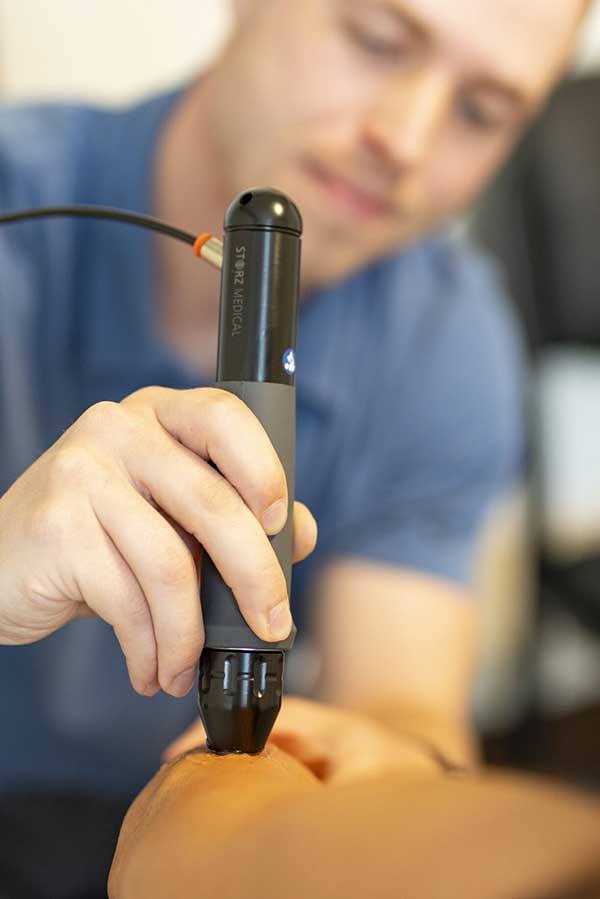
Process of Shockwave Therapy Treatment
Shockwave therapy, or extracorporeal shockwave therapy (ESWT), is an innovative, non-invasive treatment for various types of pain by stimulating the body’s natural healing process.
Shockwave therapy uses specialist devices that deliver acoustic energy to the targeted injured body part through the skin. These shockwaves are mechanical, audible, low-energy waves that increase blood flow to the patient’s injured area.
Shockwave therapy uses two main processes. In the first process, the shockwaves desensitize nerve endings to reduce pain immediately. In the second process, the shockwaves create controlled micro-trauma or microscopic damage to the tissues to facilitate the body’s response and increase blood circulation and metabolism in the affected area.
Shockwave treatment typically takes 5-10 minutes, depending on the condition. It also takes 3-4 therapy sessions, 5-10 days apart. Patients should refrain from physical activity associated with the treatment for at least 48 hours after every treatment session.
Types of Devices Used in Shockwave Treatment
There are four main types of shockwave devices, and they include:
Focused Shockwave Therapy Device
This device delivers high-energy shockwaves to the target area, making it the best option for treating localized conditions such as calcific shoulder tendinitis, planter fasciitis, and tendinitis. It uses focused shockwave technology that concentrates shockwave energy on a specific area deep in the patient’s tissues to maximize therapeutic effects while minimizing damage to surrounding structures.
Radial Shockwave Therapy Device
This device emits shockwaves in a divergent or radial pattern to spread shockwaves across a broader area of the target tissues. This makes it ideal for treating conditions requiring a diffuse treatment approach or larger areas. Some of the conditions that require this type of treatment include myofascial trigger points, chronic pain syndromes, and cellulite reduction.
Electromagnetic Shockwave Therapy Device
This device uses electromagnetic technology to produce shockwaves that precisely control penetration depth and energy delivery. It is often recommended for its adjustable parameters, which allow chiropractors to tailor treatment according to a patient’s needs.
Pneumatic Shockwave Therapy Device
This device generates shockwaves using compressed air, offering a reliable, cost-effective therapy option. It’s known for its durability and simplicity, making it ideal for clinical settings where efficiency is required. It’s widely used in sports medicine, physical therapy, and rehabilitation centers that manage soft tissues.
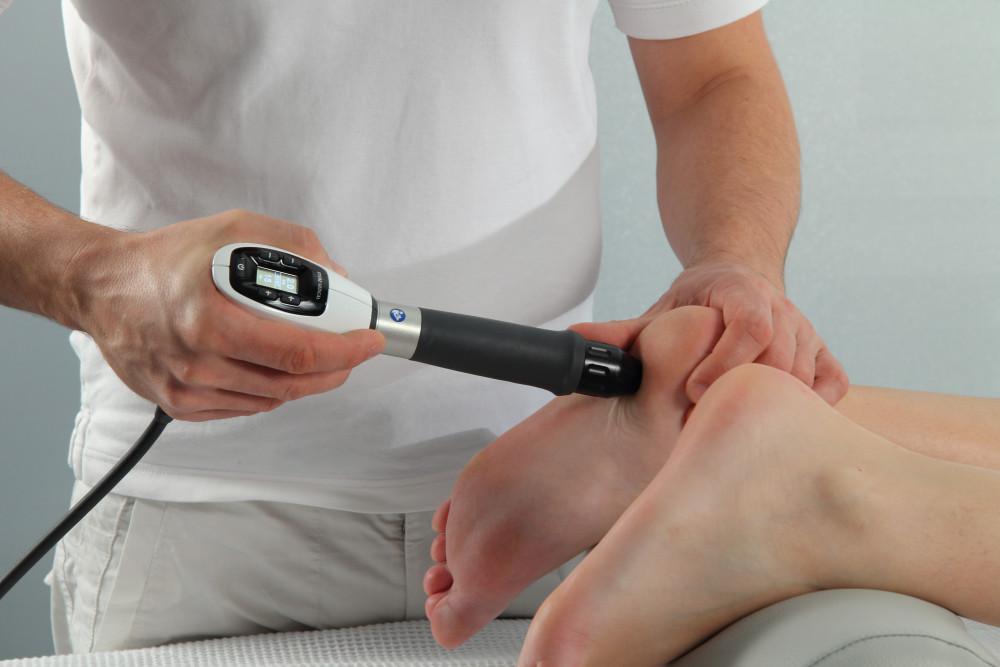
Conditions Treated with Shockwave Therapy
Shockwave therapy is used to treat various musculoskeletal conditions in Whitefish Chiropractic. Examples of the specific conditions that we treat using this therapeutic approach include the following:
- Plantar fasciitis
- Tennis elbow
- Knee pain or patella tendinopathy
- Hamstring injuries
- Hip pain such as lateral hip pain and rectus femoris
- Shoulder pain like rotator cuff injuries
The National Institute for Health and Care Excellence (NICE) and other related organizations support using shockwave therapy for pain treatment. Plenty of double-blind, controlled, and randomized research supports it. They indicate up to 91% improvement in pain management and an 84% success rate for various conditions.
When it comes to improvement for specific conditions, these researches indicate:
- 84% improvement in plantar fasciitis
- 91% on shoulder calcific tendonitis
- 77% for tennis elbow
- 76% for Achilles tendinopathy
- 95% for myofascial trigger point
- 85% for hamstring injuries
- 76% for patellar tendonitis.
Role of a Chiropractor in Shockwave Therapy
Shockwave therapy is typically used in chiropractic services when other care techniques are unsuccessful in treating pain before deciding on more invasive or surgical options. A chiropractor is a licensed healthcare professionals who rely on the body’s natural healing process in their treatment. Therefore, since this is a non-invasive approach to healing pain, it suits their practice.
Other benefits of using shockwave therapy in chiropractic include:
- It’s a suitable approach to lowering Substance P
- It improves the formation of new blood vessels
- Releases trigger points in the limbs, back, neck, shoulders, and other areas causing pain
- Suitable for reversal of chronic pain
- Increases recovery time
Experience Lasting Relief with Whitefish Chiropractic’s Shockwave Therapy
If you’re suffering from chronic pain, shockwave offers a reliable, non-invasive, and cost-effective treatment. Regardless of the pain you’re experiencing, this treatment procedure offers a unique approach to your treatment.
At Whitefish Chiropractic, we offer quality chiropractic care to patients in Whitefish, Columbia Falls, Kalispell, and their surroundings, including shockwave therapy. With over two decades of clinical experience, Dr. Ryan Wigness , Dr. Mike Sybrant, and Dr.Connor Tobisch are ready to lead you into a more active and healthier life with their services. Contact us today to schedule your appointment.
Testimonials
We encourage you to read some of our patient testimonials to understand better who we are and how we work.
“After having bad Chiropractor experience, I finally found a doctor that knows what he’s doing and is caring & compassionate! Dr. Wigness was wonderful at finding my problems and went right to work on those areas. He gave me info so that I can continue to work on these areas at home. I’m looking forward to my next appointment & THANKFUL I’ve FOUND a Chiropractor I can trust!” – Thalia D. // Kalispell, MT
“I will be 70 this month and because of you I still hunt,fish, spit wood and all my activities. Many thanks!” – Sheila G. // Kalispell MT
“Dr. Wigness is great. Has a way with kids. My children are very comfortable with him and his adjustments.” – Jackson D. // Whitefish, MT
Other conditions we treat include:
- Golfer’s elbow
- Soft-tissue adhesions
- Plantar fasciitis
- Pinched nerves
- Sprains and strains
- Arthritis
- Arm pain
- Hand pain
- Foot pain
- Joint pain
- Disc injuries
- Degenerative disc disease
- Mobility problems
- Balance problems
- Rotator cuff syndrome
- Shin splints
- Overuse injuries
- Degenerative joint disease
- Muscle spasms
- Post-surgical back pain
- Disc bulge
- Frozen shoulder
- Impingement syndrome
- Torticollis
- Spinal stenosis
- Failed back surgery
- Adhesive capsulitis
- Iliotibial band syndrome
- Radiculopathy
- Regional pain syndrome
- Lateral / medial epicondylitis
- Piriformis syndrome
- Temporomandibular disorder
- And more
Shockwave Therapy FAQs
What is shockwave therapy and how does it work?
Shockwave therapy is a non-invasive treatment that uses acoustic waves to stimulate healing in injured or painful tissue. These waves increase blood flow, break down scar tissue, and trigger the body’s natural repair process. It is commonly used for chronic conditions that have not responded well to rest, medications, or other therapies.
What conditions can shockwave therapy treat?
Shockwave therapy is highly effective for a range of musculoskeletal conditions, including:
- Plantar fasciitis
- Tennis elbow and golfer’s elbow
- Shoulder pain and rotator cuff issues
- Knee pain, including degenerative conditions
- Achilles tendinitis
- Hip pain and bursitis
- Chronic muscle tightness and trigger points
It is especially helpful for chronic or stubborn cases where healing has stalled.
What’s the difference between focused and radial shockwave therapy?
There are two main types of shockwave therapy:
- Focused shockwave therapy targets deeper tissues with precise energy
- Radial shockwave therapy treats broader, more superficial areas
This clinic offers both, allowing treatment to be customized based on your condition, depth of injury, and goals. Many clinics only offer one type, which can limit results.
Why does it matter that you offer both focused and radial shockwave?
Having access to both technologies means your treatment is not one-size-fits-all. Conditions that involve deeper joint structures may respond better to focused shockwave, while surface-level or larger areas often benefit from radial shockwave. Using the right approach improves outcomes and speeds up recovery.
Is shockwave therapy painful?
Most patients describe the treatment as mildly uncomfortable rather than painful. The intensity can be adjusted to your tolerance, and sessions are typically quick. Many patients notice that discomfort decreases as healing begins.
How many sessions will I need?
Most patients need a series of treatments, often between 3 to 6 sessions, depending on the severity and duration of the condition. Your provider will recommend a plan based on your specific needs and how your body responds.
How quickly will I see results?
Some patients notice improvement after the first or second session, but the most significant results typically develop over several weeks as the body continues to heal. Shockwave therapy works by stimulating natural repair, so results build over time.
Is there any downtime after treatment?
There is little to no downtime. Most patients return to normal daily activities right away. You may be advised to avoid intense activity for a short period to allow the healing process to progress.
Is shockwave therapy safe?
Yes, shockwave therapy is considered very safe when performed by trained professionals. This clinic uses advanced technology and follows established protocols to ensure effective and appropriate treatment.
What makes your clinic different for shockwave therapy?
This clinic is positioned as a leader in shockwave therapy in the Flathead Valley because of:
- Training through the Academy of Shockwave Excellence
- Use of advanced Storz Medical technology
- Access to both focused and radial shockwave therapy
- Experience treating a wide range of conditions, from chronic pain to performance-related injuries
Patients receive a customized treatment approach based on their condition, not a one-size-fits-all protocol.
Where is shockwave therapy available?
- Whitefish: Focused and radial shockwave therapy
- Kalispell and Columbia Falls: Radial shockwave therapy
This allows patients across the Flathead Valley to access care, with advanced options available at the Whitefish location.
Can shockwave therapy help me avoid surgery?
In many cases, yes. Shockwave therapy is often used as a non-surgical option for chronic pain and degenerative conditions. This clinic is also recognized as Montana’s first certified non-surgical joint replacement clinic for the knee, making it a strong option for patients looking to avoid more invasive procedures.
Who is a good candidate for shockwave therapy?
Shockwave therapy is ideal for patients who:
- Have chronic pain that hasn’t improved with other treatments
- Want to avoid injections or surgery
- Are dealing with tendon, ligament, or soft tissue injuries
- Are looking to speed up recovery and return to activity
A consultation will determine if it is the right fit for your condition.
Does shockwave therapy really work?
Clinical research and real-world outcomes show strong success rates, especially for chronic conditions like plantar fasciitis and tendon injuries. When combined with the right diagnosis and treatment plan, it can significantly reduce pain and improve function.
Do I need a consultation before starting?
Yes. A proper evaluation ensures the treatment is appropriate for your condition and allows your provider to select the right type of shockwave therapy and settings for optimal results.